Corruption remains a significant challenge for the private sector in Colombia, undermining fair competition and public trust. While anti-corruption efforts have traditionally focused on government and business actors, the contributions of academia and civil society to business integrity have often remained underutilized.
To address this gap, the United Nations Office on Drugs and Crime (UNODC) brought together representatives from the private sector, public institutions, academia and civil society through a series of workshops held in seven Colombian cities: Barranquilla, Bogotá, Manizales, Medellín, Quibdó, Santa Marta and Tumaco.
The workshops engaged nearly 500 participants in identifying corruption risks affecting the private sector and exploring collective solutions tailored to local realities. The initiative fostered dialogue, encouraged cross-sector collaboration and highlighted the important role that universities and civil society organizations can play in promoting transparency and ethical business practices.
Daris Cortezano, a civil society representative from Santa Marta, emphasized the importance of collaboration in anti-corruption efforts, “The key to an effective anti-corruption fight in Santa Marta lies in collaboration. Involving regional public actors fosters joint actions, builds trust between sectors, and strengthens transparency. This teamwork is essential for the successful implementation of collective anti-corruption actions.”
Alejandra Aristizábal from the Universidad de Antioquia in Medellín highlighted the value of integrating academic research into anti-corruption efforts, “For companies to better combat corruption, they need to use more information from academic studies. Opening up to research as a teamwork tool will build trust among various stakeholders. This will allow companies and other groups to work together, utilize new ideas, and achieve more effective action against this scourge.”
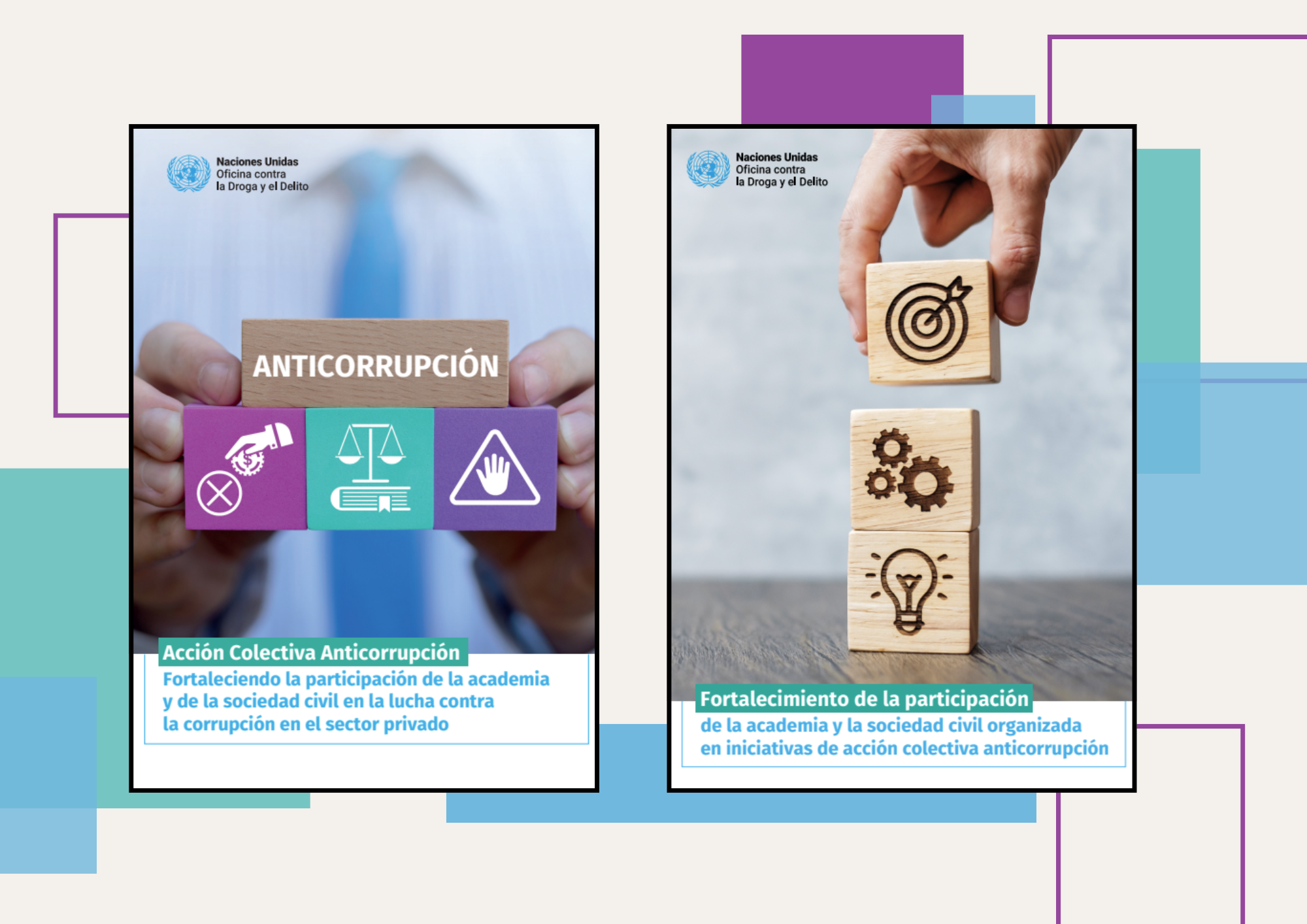
Drawing on the insights gathered during the workshops, UNODC developed two reports that capture regional experiences and provide recommendations for strengthening the participation of academia and civil society in collective anti-corruption initiatives: “Fortalecimiento de la participación de la academia y la sociedad civil organizada en iniciativas de acción colectiva anticorrupción” and “Acción Colectiva Anticorrupción: Fortaleciendo la participación de la academia y de la sociedad civil en la lucha contra la corrupción en el sector privado”.
The publications serve as practical resources for businesses, policymakers, academic institutions and civil society organizations seeking to design and implement corporate strategies, public policies, and action plans tailored to local contexts.
The methodology piloted in Colombia has also informed similar work in Pakistan, where stakeholders contributed to the development of an Anti-Corruption Collective Action Plan, demonstrating the broader applicability of this multi-stakeholder approach.
