A RESOURCE GUIDE ON STATE MEASURES FOR STRENGTHENING BUSINESS INTEGRITY
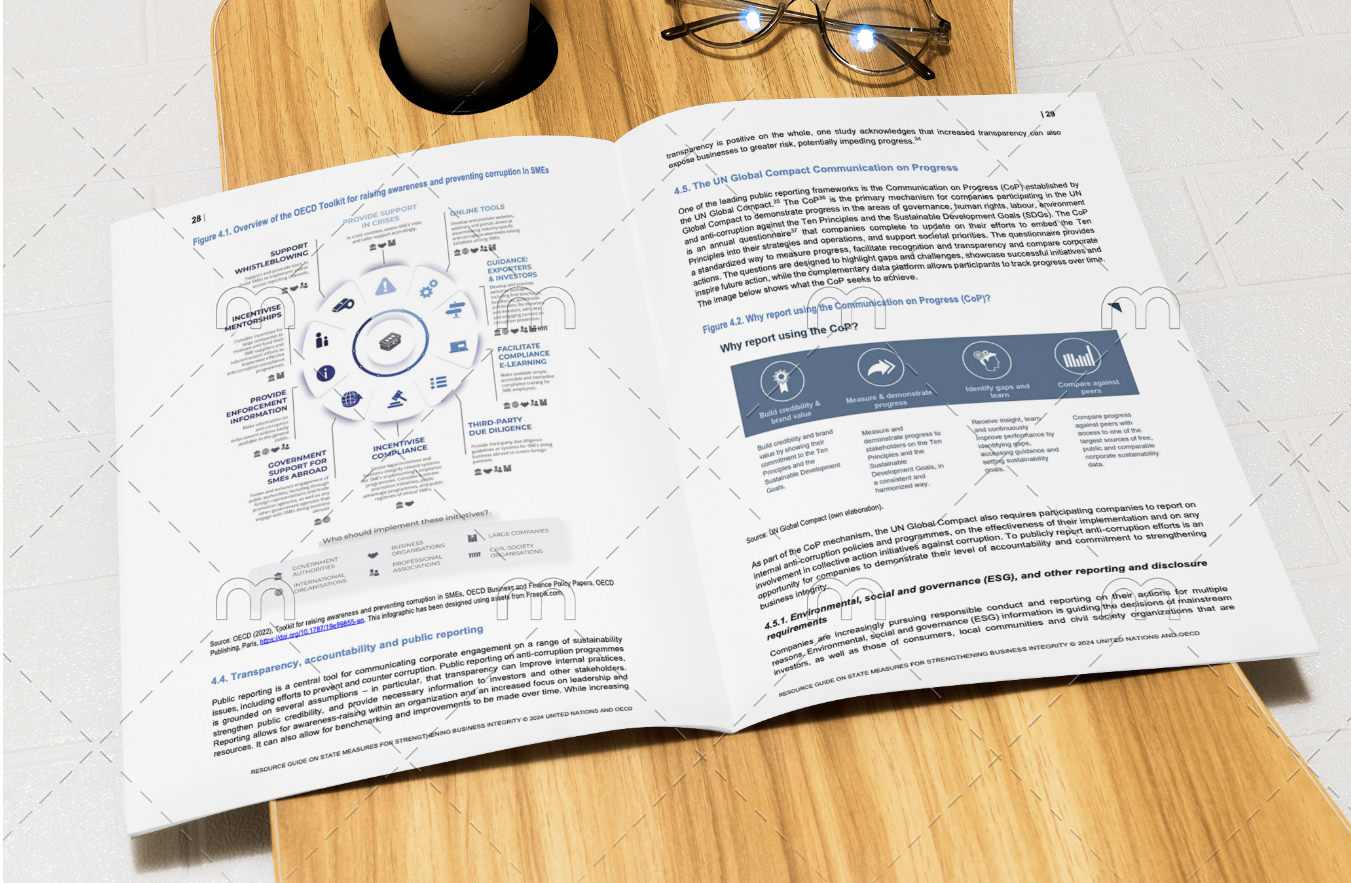
The publication "A Resource Guide on State Measures for Strengthening Business Integrity” is designed to provide States with a framework for encouraging business integrity by identifying and implementing an appropriate mix of sanctions for misconduct, and by outlining good practices for incentives.
This Resource Guide describes the various sanctions and incentives options available to States, including how States can design and implement incentives to reward businesses for adopting ethical practices, complying with anti-corruption requirements and for cooperating during law enforcement processes. It also provides examples from different regions and sectors, as well as practical resources to help governments and the private sector in developing effective collective action initiatives and public-private partnerships against corruption.
International standards like the United Nations Convention against Corruption (UNCAC) require States to put in place a framework to prevent and counter corruption involving the private sector. Article 12 of the Convention focuses on ways to enhance integrity in the private sector, while article 26 requires States parties to establish the liability of legal persons for acts of corruption. The responsibility to meet the obligations of the Convention ultimately lies with governments; however, the global fight against corruption will not be successful without the engagement of the private sector. Working together in the spirit of collective action, governments and companies can build an environment conducive to investment, economic growth and sustainable development.
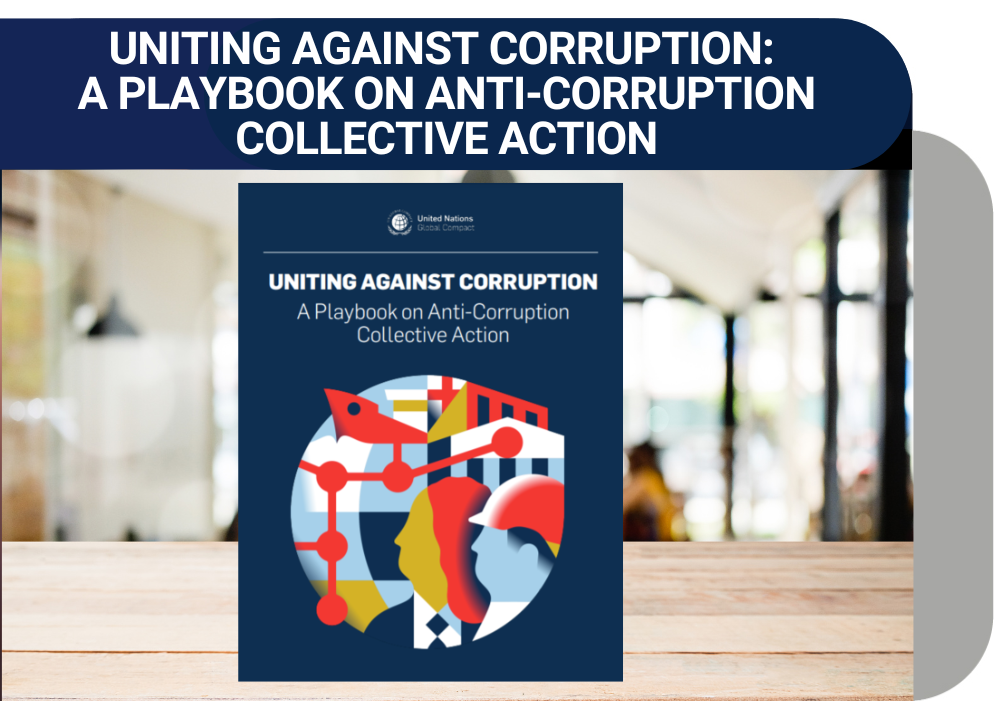
The publication “A Resource Guide on State Measures for Strengthening Business Integrity” is jointly produced by the United Nations Office on Drugs and Crime (UNODC), the United Nations Global Compact (UN Global Compact) and the Organisation for Economic Co-operation and Development (OECD). This publication is a fully updated and expanded version of the 2013 UNODC publication “The United Nations Convention against Corruption: A Resource Guide on State Measures for Strengthening Corporate Integrity”.
This publication has been prepared in furtherance of the resolution 10/12, entitled “Providing incentives for the private sector to adopt integrity measures to prevent and combat corruption”, which was adopted by the Conference of the States Parties to the United Nations Convention against Corruption at its tenth session in December 2023.

 EXPLORE FURTHER
 OTHER RESOURCES