The original web story appeared on the UNODC Brazil website
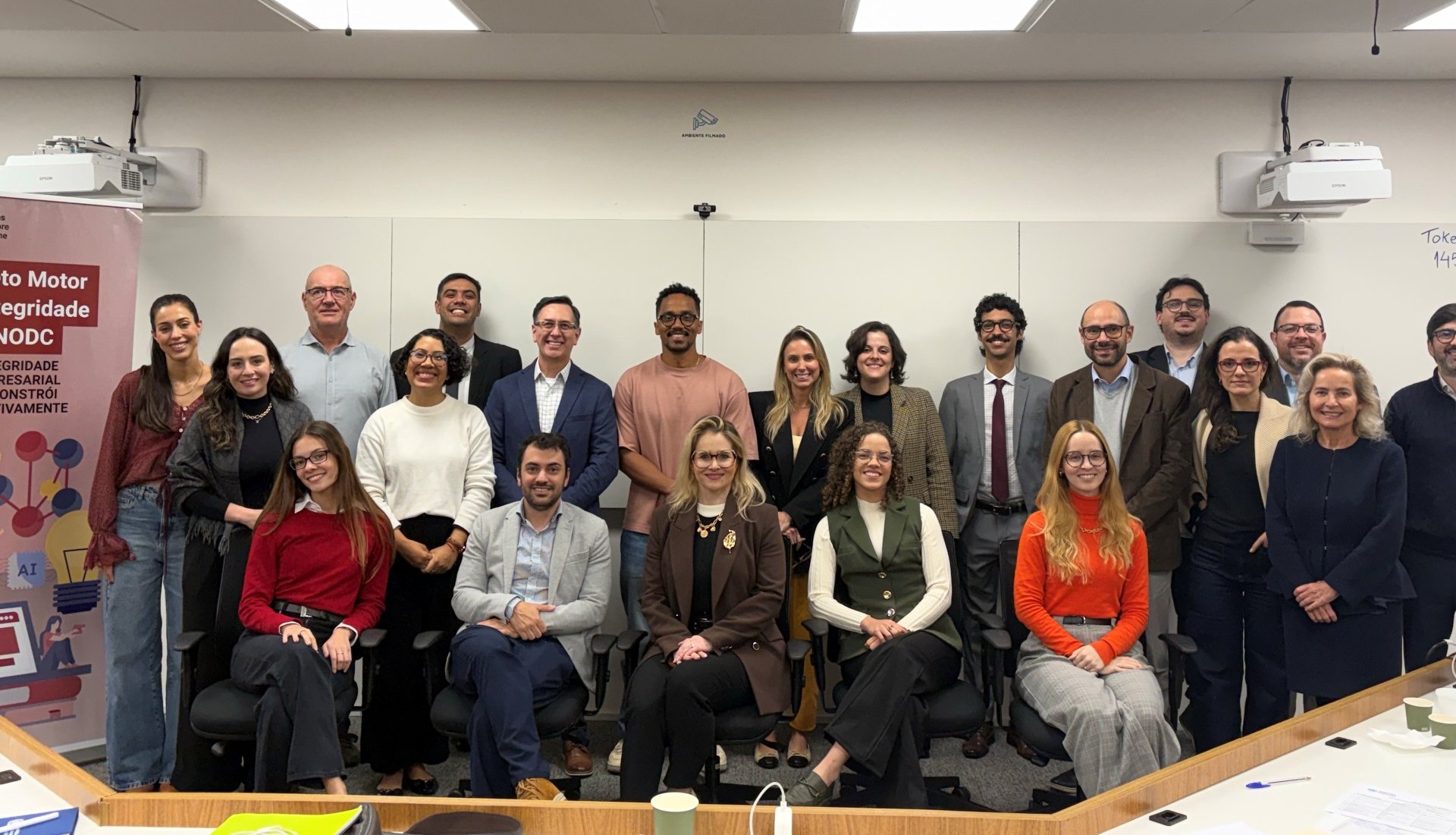
Sao Paulo, Brazil, September 2026 – The United Nations Office on Drugs and Crime (UNODC) held a training programme on teaching anti-corruption, integrity and ethics for university lecturers as part of the Integrity Engine project. The programme culminated in an in-person workshop on 15 and 16 September at the Fundação Getulio Vargas (FGV) in Sao Paulo, bringing together 20 lecturers from across different universities in Brazil to strengthen their capacity to teach integrity-related subjects in higher education.
Implemented with the support of the Siemens Integrity Initiative, the Integrity Engine project seeks to strengthen business integrity through education by equipping students with practical tools to address ethical challenges and corruption risks in their future professional environments. The initiative is simultaneously being implemented in Brazil, China and Malaysia, and builds on UNODC's experience promoting integrity education and collaboration between academia and the private sector to foster a new generation committed to ethical business practices. As part of the workshop, participants simulated classroom sessions based on six UNODC University Modules on Anti-Corruption and on Integrity and Ethics that had been adapted for the Brazilian business integrity context. The workshop combined teaching demonstrations, peer discussions and exchanges with experts from academia and the private sector in Brazil and Mexico, with a focus on student-centred learning and the practical application of integrity concepts in the classroom.
The in-person training workshop was preceded by several weeks of preparation, including independent study of the modules, completion of a United Nations online course on teaching anti-corruption and integrity topics, and collaborative planning of the teaching demonstrations.
The training marks an important milestone in the Integrity Engine project in Brazil. Following several months of collaboration, the project's Business-Academia Working Group successfully completed the contextualization of six UNODC University Modules on Anti-Corruption and on Integrity and Ethics for use in Brazilian higher education institutions.
The adapted materials incorporate references from Brazil's anti-corruption legal and regulatory framework, contemporary business integrity challenges and case studies relevant to the national business context. Topics covered include the nature of corruption, ethical leadership, corruption in the private sector, corruption and human rights, ethical conduct, and business integrity.
By integrating local examples and practical challenges faced by private sector organizations operating in Brazil, the modules provide lecturers with teaching materials that are both globally informed and locally relevant for students. The completion of this contextualization process now enables universities to begin integrating the modules into teaching and learning activities across a range of academic disciplines.
Since its launch in April 2026, the project's Business-Academia Working Group in Brazil has brought together representatives from more than 30 companies and 20 academic institutions to advance business integrity education in Brazil.
Throughout 2026, Working Group members collaborated to review and contextualize the modules, exchange expertise, and identify opportunities to strengthen business integrity education. The process enabled participants to contribute knowledge from their respective fields while ensuring that the resulting educational materials reflect both academic perspectives and real-world business integrity challenges.
Beyond the development of teaching materials, the Working Group has also served as a platform for dialogue and cooperation between academia and the private sector. To date, the Working Group has held three meetings to foster engagement and collaboration among its members. By connecting universities and companies, it contributes to building a national network of professionals committed to promoting ethical business practices in line with the United Nations Convention against Corruption (UNCAC), for which UNODC serves as guardian.
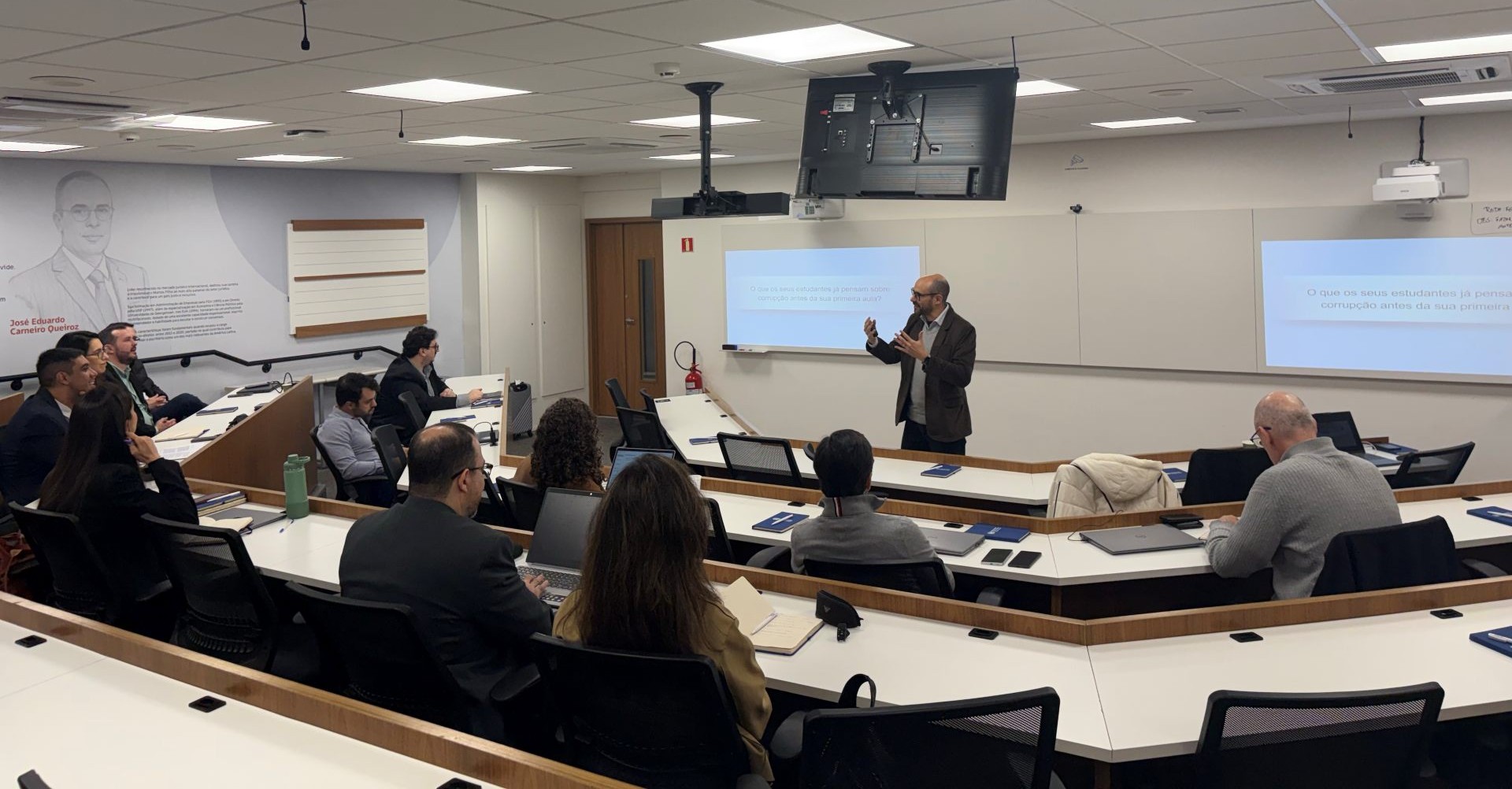
Following the training programme, participating lecturers will be encouraged to integrate the contextualized modules into university courses, extracurricular activities, lectures, webinars and other academic initiatives. UNODC will continue supporting the implementation of the materials, including by inviting business representative and compliance officers from business in Brazil to deliver guest lectures at the universities focused on ethical challenges and risks in the workplace. UNODC will also conduct follow-up activities to assess their impact on students' ethical reasoning, decision-making and understanding of business integrity issues.
To further expand the initiative, a “Call for Interest” is now open to lecturers interested in incorporating anti-corruption, integrity and ethics content into their teaching or supporting the dissemination of knowledge in these areas. Participants may also have opportunities to contribute to future project activities, including training programmes, business guest lectures and the establishment of a Youth Ethics Ambassadors Network. To fill out the “Call for Interest” form, please access here.
Through these efforts, the Integrity Engine project aims to strengthen the connection between education and business integrity, ensuring that future professionals enter the workforce equipped with the values, knowledge and practical skills needed to promote ethical and responsible business conduct. For more information about UNODC's work on business integrity, visit the UNODC Business Integrity Portal and the UNODC Brazil website.
