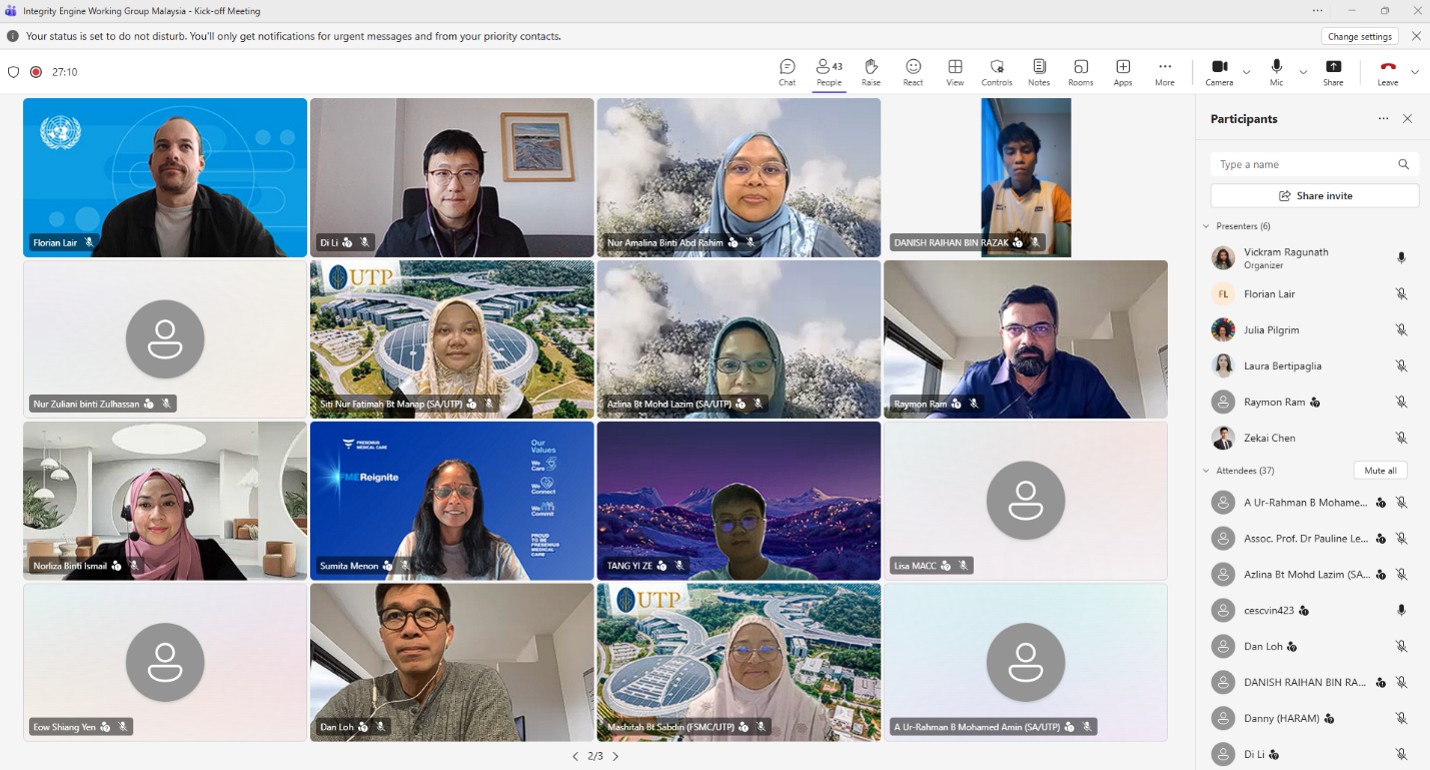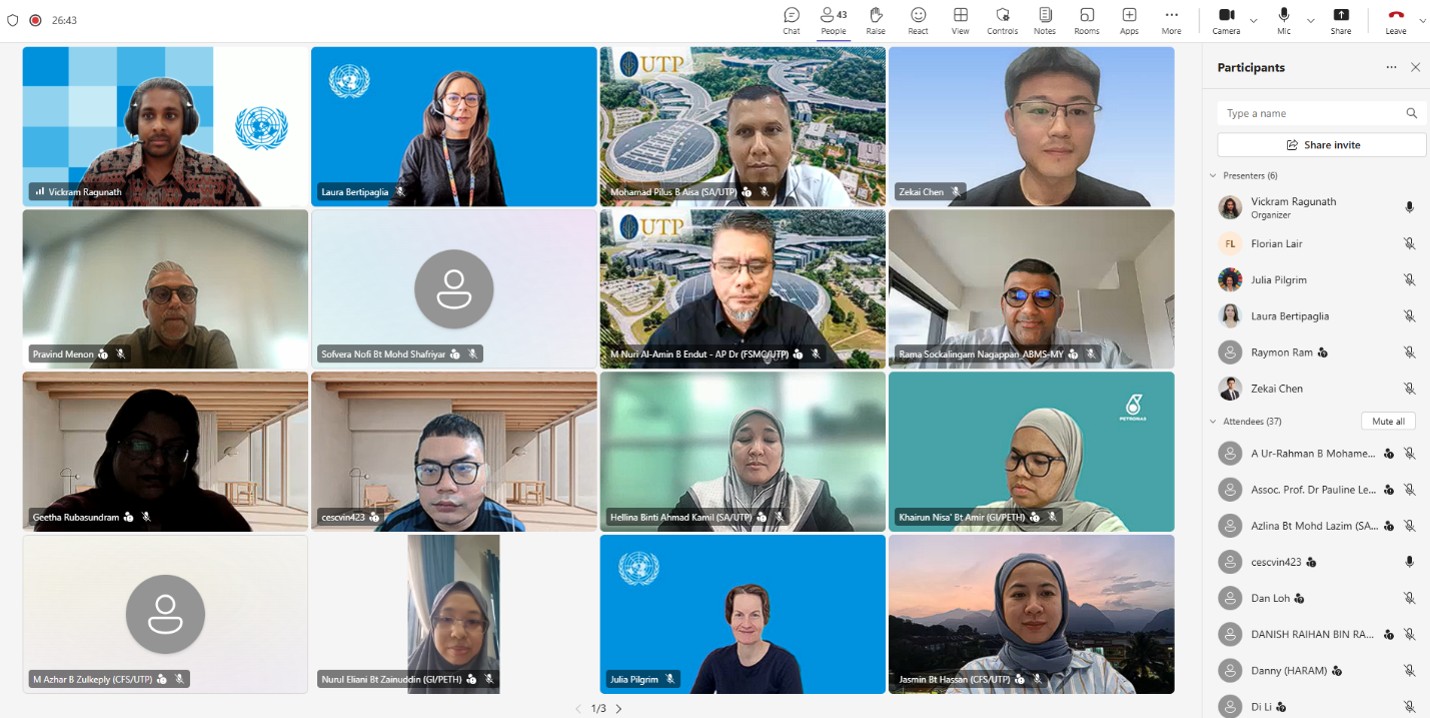
Kuala Lumpur (Malaysia), 29 April 2026 – The United Nations Office on Drugs and Crime (UNODC) convened the online kick-off meeting of the Integrity Engine Working Group in Malaysia, bringing together representatives from four universities, 12 private companies, the Malaysian Anti-Corruption Commission (MACC), civil society, and youth representatives to strengthen business integrity and anti-corruption education through multi-stakeholder collaboration.
Held online, the meeting kick-started the process of contextualizing selected UNODC University Modules Series on Integrity & Ethics and on Anti-Corruption to the Malaysian context and business integrity landscape under the Integrity Engine project.
The Working Group will serve as the main coordination and consultation mechanism for the project in Malaysia, supporting collaboration between universities and companies to equip students with practical ethical decision-making skills early in their professional journey and to contribute to a national talent pipeline committed to integrity, ethical leadership, and sustainable business practices.
The Integrity Engine is a global UNODC project funded by the Siemens Integrity Initiative, with a three-year duration (2025–2028), and implemented in Brazil, China, India, and Malaysia. The project builds on the achievements of the Global Integrity Education project (2019–2025), which demonstrated the value of closer cooperation between academia and the private sector in strengthening integrity education for university students.
By promoting integrity, accountability, and ethical decision-making among future professionals, the initiative contributes to the advancement of the Sustainable Development Goals (SDGs), particularly SDG 16 on peace, justice and strong institutions, and SDG 4 on quality education.
During the kick-off meeting, participants discussed key corruption risks affecting the private sector, ethical challenges faced by early-career professionals, and gaps in current integrity and anti-corruption education programmes in Malaysia.
Participants identified procurement fraud, bribery, abuse of power, conflicts of interest, and money-laundering among the most common corruption risks affecting the private sector, particularly in sectors heavily reliant on third parties and supply chains.
Participants also highlighted the ethical pressures faced by young professionals entering the workforce, including fear of retaliation, pressure from superiors, reluctance to speak up, and lack of trust in reporting mechanisms.
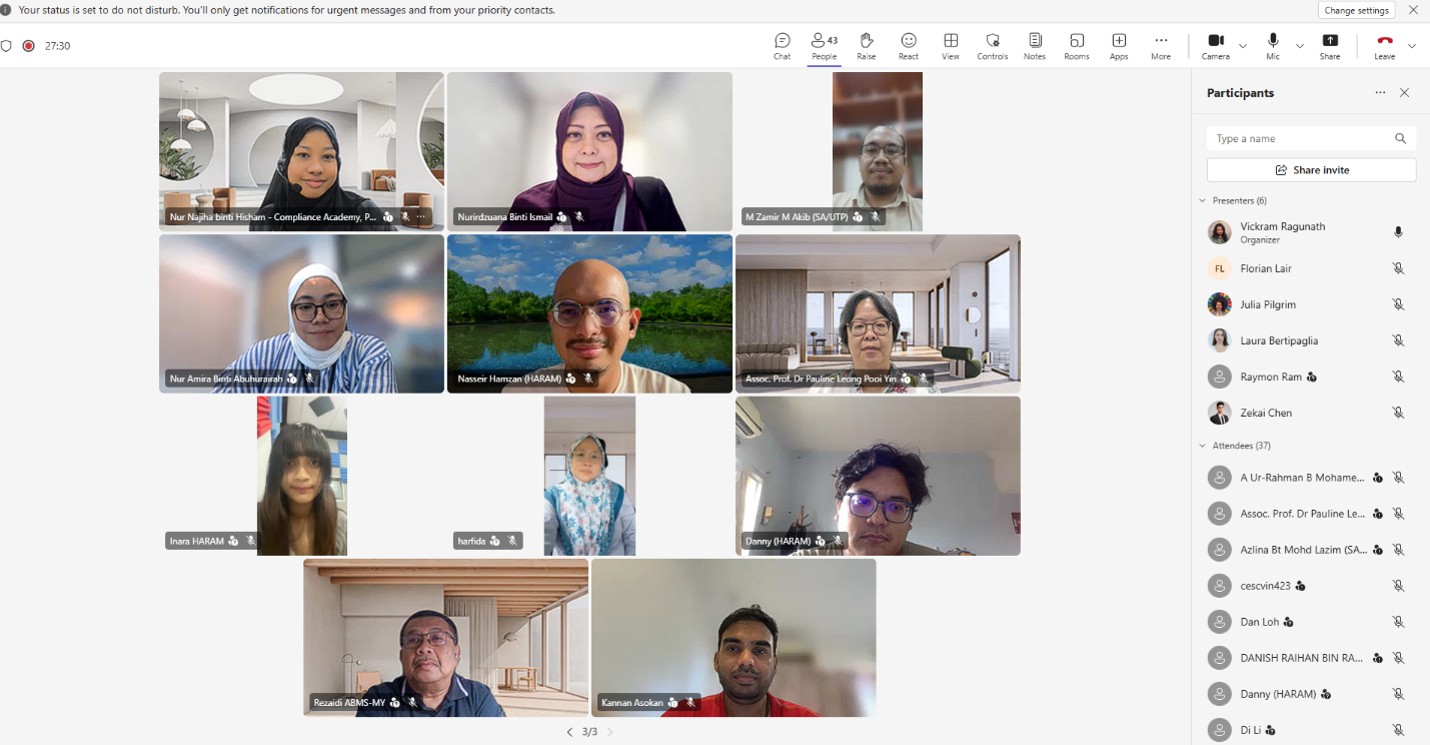
Throughout the discussions, participants emphasized the need to complement existing university-level integrity programmes with more practical and interactive approaches, including scenario-based learning, case studies based on real anti-corruption situations in Malaysia, guest lectures from business practitioners, and integrity-focused internships in companies.
Representatives from academia noted the importance of strengthening lecturers’ capacities on anti-corruption and integrity topics, while civil society and government participants highlighted emerging integrity challenges linked to technology and artificial intelligence, including deepfakes, digital manipulation, and data protection concerns.
Finally, participants stressed the importance of preparing students to navigate ethical challenges in rapidly evolving professional environments and to contribute to more transparent, accountable, and sustainable institutions and business practices.
The Working Group will support the contextualization and review of selected UNODC GRACE University Modules by incorporating Malaysian anti-corruption legal frameworks, corruption risks in the private sector, case studies on workplace ethical challenges , and practical business realities related to integrity and anti-corruption into the learning materials.
The initiative will also facilitate knowledge exchange between academia and the private sector across the target countries, promote opportunities for student engagement with industry practitioners and integrity professionals, and support meaningful youth engagement in promoting business integrity.
By fostering collaboration among universities, companies, government institutions, civil society and youth representatives, the Integrity Engine project contributes to strengthening a culture of integrity aligned with the United Nations Convention against Corruption (UNCAC) and international standards, while supporting broader efforts toward sustainable and inclusive development.
The Working Group will next focus on the selection of the UNODC University Modules to be contextualized, the training of lecturers to teach these modules at the university level and continued stakeholder consultations throughout 2026.
For more information about UNODC’s work in combating corruption, visit the global UNODC website, the UNODC Business Integrity Portal, and the UNODC Programme Office Malaysia website.