The original web story appeared on the UNODC Brazil website
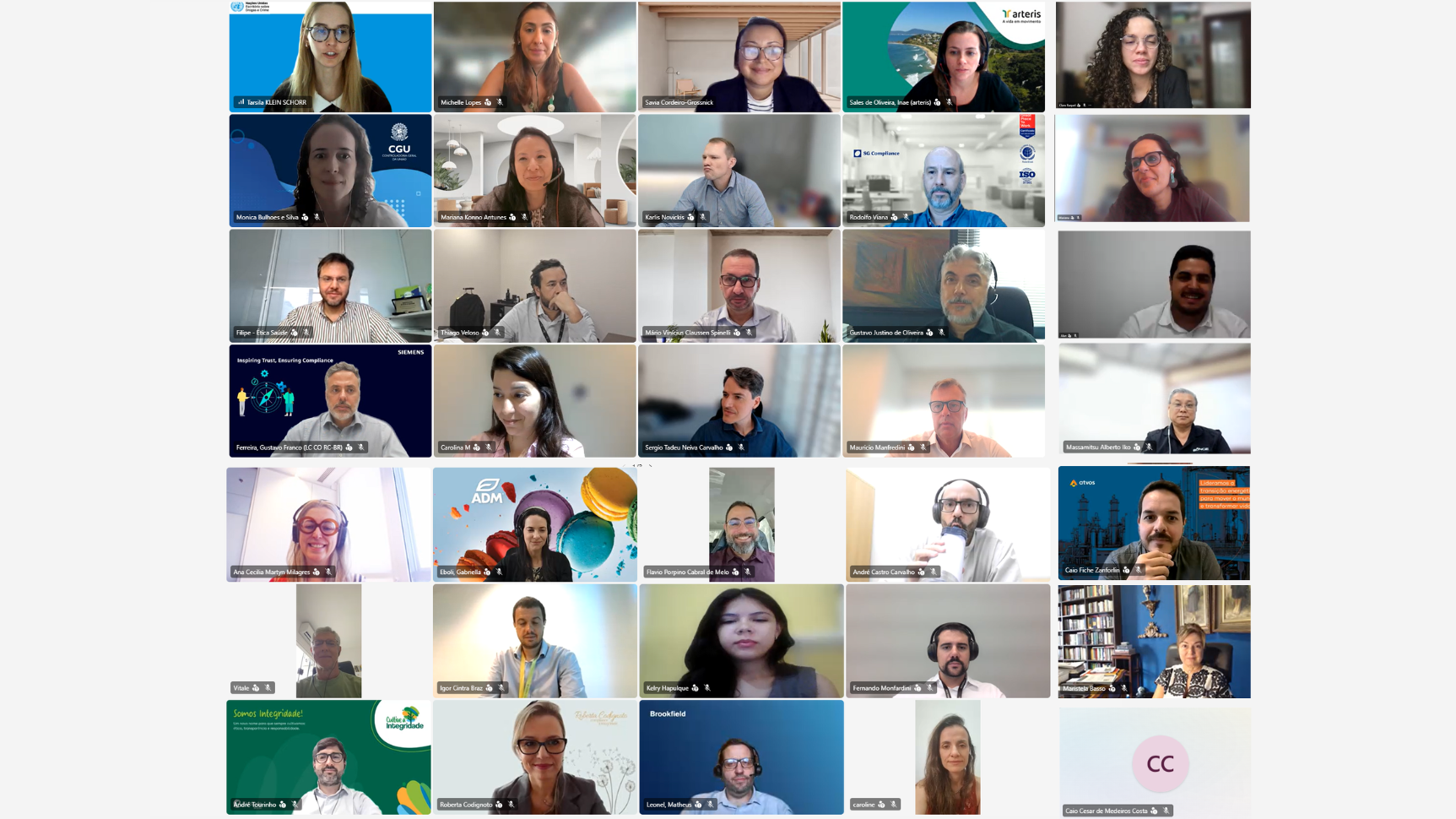
Brasília, Brazil - 9 April 2026 – The United Nations Office on Drugs and Crime (UNODC) has launched, in April, the Academia–Private Sector Working Group of the “Integrity Engine” project in Brazil, marking a new step toward strengthening business integrity through higher education and multi-stakeholder cooperation.
The initiative brings together more than 30 companies and 20 representatives from academia, including university professors and professionals in integrity and compliance, who will work collaboratively throughout the project’s implementation in the country.
The Working Group is the main coordination mechanism of the Integrity Engine in Brazil and aims to support the contextualization and implementation of the UNODC University Modules on Integrity & Ethics and Anti-Corruption, incorporating national regulatory frameworks, local ethical challenges, and Brazilian case studies.
Education as a Central Pillar for Business Integrity
The Integrity Engine is a global UNODC project funded by the Siemens Integrity Initiative, with a three-year duration (2025–2028), operating in China, India, and Malaysia, and now being implemented in Brazil. The initiative builds on the results of the Global Integrity Education Project (2019–2025), which demonstrated the positive impact of closer collaboration between universities and the private sector in strengthening the ethical formation of university students.
In Brazil, the project recognizes the strategic role of youth and higher education institutions in fostering a culture of integrity by preparing students to face ethical dilemmas from the outset of their professional paths.
Role of the Working Group in Brazil
The main responsibilities of the Working Group include identifying good practices and priority university modules that reflect the country’s regulatory, institutional, and business contexts; proposing strategies to integrate these modules into undergraduate curricula; supporting exchanges between universities and the private sector and the training of lecturers; and promoting practical learning experiences such as guest lectures and company visits for university students.
The Working Group will also serve as a forum for dialogue on integrity within academia and the private sector, fostering joint learning.
By connecting universities and businesses, the Working Group contributes to building a national network of talents committed to ethical business practices aligned with the United Nations Convention against Corruption (UNCAC), for which UNODC serves as guardian.
For more information about UNODC’s work in combating corruption, visit the global UNODC website and the UNODC Brazil website.
