Vienna (Austria) – 28 June 2024. In June, the global anti-corruption community came together for two significant events: the 21st edition of the International Anti-Corruption Conference (IACC) in Vilnius, Lithuania, hosted by Transparency International, and the 5th International Collective Action Conference in Basel, Switzerland, organized by the Basel Institute on Governance. These gatherings brought together stakeholders from the private and public sectors, international organizations, civil society, and academia, providing a vital platform to revisit previous commitments and engage with key stakeholders.
At both events, the United Nations Office on Drugs and Crime (UNODC) and the United Nations Global Compact (UN Global Compact) followed up on the priorities highlighted at the first-ever Private Sector Forum, held on the margins of the tenth session of the Conference of the States Parties (CoSP10) to the United Nations Convention against Corruption (UNCAC) in December 2023 and discussed the implementation of resolution 10/12 “Providing incentives for the private sector to adopt integrity measures to prevent and combat corruption”. This resolution was a direct response to the Call-to-Action from Business to Governments, which was presented during CoSP10, urging governments to enhance governance and anti-corruption efforts through public-private partnerships and dialogue. These themes were central to discussions at both events, highlighting the role of collective action and incentives in promoting business integrity measures globally.
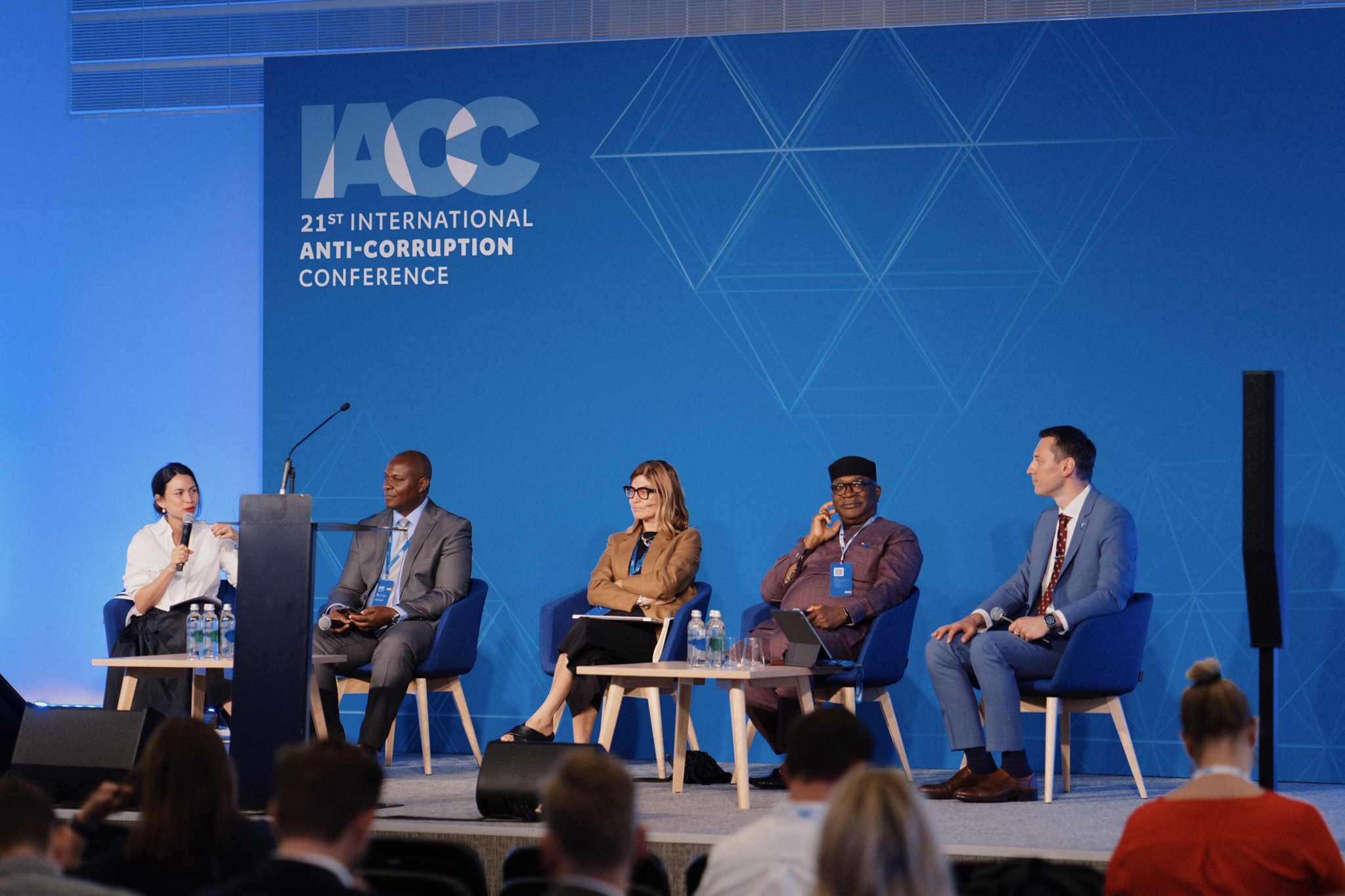
During the IACC that took place from 18 – 21 June 2024, UNODC and the UN Global Compact hosted an interactive workshop titled “Business Integrity 2.0: Where do we go from here?”. The engaging session explored the future of business integrity, emphasizing the role of incentives in driving meaningful change. Representatives from the public and private sectors, civil society, and other stakeholders dedicated to advancing business integrity participated in the discussion. One of the key messages of the session was highlighted by Dr. Silvina Bacigalupo, a Criminal Law Professor at the Universidad Autónoma de Madrid (UAM), who also serves as the Chair of Transparency International Spain, and a TI-International Board Member. She stated, "Incentives for business integrity must be thought from a preventive perspective to ensure due actions to prevent corruption and strengthen corporate culture of integrity.” According to Mr. Aleksej Daineko, Vice President, Chief Ethics and Compliance Officer at Lundbeck, “We are in this [fighting corruption] together. Co-creation of ethical frameworks across public and private sectors also strengthens ownership, empowers businesses and makes them accountable.”
At the same event, the UN Global Compact hosted a session titled “Future-Proofing Business: The Integrity Advantage for ESG (environmental, social and governance)”, highlighting the critical role of anti-corruption in achieving corporate sustainability. The session’s deliberations were linked to the Transformational Governance Toolkit, which was also launched during the Private Sector Forum. The self-assessment tool provides a framework for engaging with and applying the principles of transformational governance.
The IACC provided an opportunity to receive updates on the 2013 UNODC publication “An Anti-Corruption Ethics and Compliance Programme for Business: A Practical Guide,” along with insights into ongoing activities. UNODC and the UN Global Compact are updating the Practical Guide that will be instrumental in offering businesses the necessary guidance to establish and implement effective anti-corruption programmes and can also serve as a benchmark for States to incentivize companies that adhere to these standards. A working group established by UNODC and UN Global Compact, comprising about 25 companies, is engaged in providing insights as part of this process.
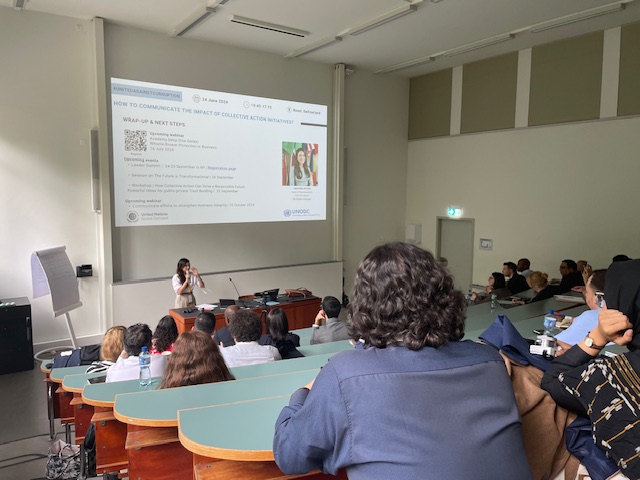
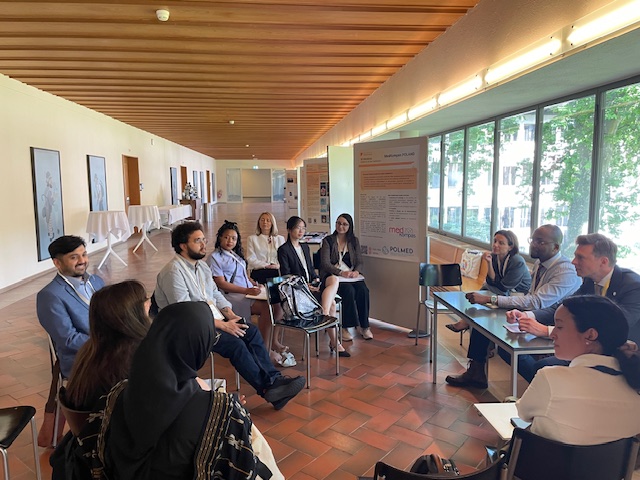
At the 5th International Collective Action Conference in Basel that took place from 24 - 25 June 2024, an interactive “World Café - style” breakout session on “How to Communicate the Impact of Collective Action Initiatives?” was hosted by the UN Global Compact and UNODC. This session offered collective action practitioners a chance to engage in deep discussions and glean insights from partners and stakeholders on the topic. It looked at ways to effectively communicate the impact of collective action initiatives through concrete recommendations and valuable insights on best practices and lessons learned from different countries and institutions. What came out clearly was that there was a need for companies to develop comprehensive communication strategies for their collective action initiatives, defining both quantitative and qualitative impacts of these activities, harnessing the power of narrative to highlight the stories behind the data and tailoring content to resonate with each specific audience.
The key insights and recommendations gathered through the session will be publicly disseminated by UNODC and the UN Global Compact to facilitate knowledge sharing and inspire more stakeholders to engage in collective action initiatives and effectively communicate their impact. The UN Global Compact brought a significant delegation to the event, with representatives from 17 countries actively engaged in the discussions – Australia, Brazil, Central America, Egypt, Georgia, Germany, India, Indonesia, Kenya, Malaysia, Mexico, Paraguay, South Africa, Switzerland, Thailand, Ukraine and the United Kingdom. The Conference facilitated the knowledge exchange and mutual learning between the participants and among both organizations – which are partners in a multitude of countries when it comes to implementing collective action initiatives.
During both events, the importance of the multi-stakeholder approach to incentivize business integrity was highlighted, as outlined in the publication, “A Resource Guide on State Measures for Strengthening Business Integrity”, which provides States with a framework for encouraging business integrity by identifying and implementing an appropriate mix of sanctions for misconduct and outlining good practices for incentives. UNODC and the UN Global Compact are offering technical assistance to relevant stakeholders to promote business integrity incentives. To request technical assistance on incentives for business integrity, please use this link.
Strengthening public-private partnerships, encouraging dialogue and incentivizing integrity measures are key in combatting corruption and bolstering governance frameworks collaboratively. Moving forward, sustained commitment to these approaches will be essential for achieving lasting impact and driving positive change in the global anti-corruption effort. The next milestone event will take place on 23 September 2024, marking 20 years of Principle Ten of the UN Global Compact.
