Vienna (Austria), 2 January 2025 – Anti-corruption compliance strategies across the private sector need a communication and reporting component that involves measuring the effectiveness of public communication of ethics and compliance, which play an important role in influencing both ethical behaviour within an organization and, further afield, company reputation. Communication and reporting mechanisms represent one of the tools that can aid in the analysis of impediments to effective ethics and compliance strategies that can help to combat corrupt practices in organizations around the world.
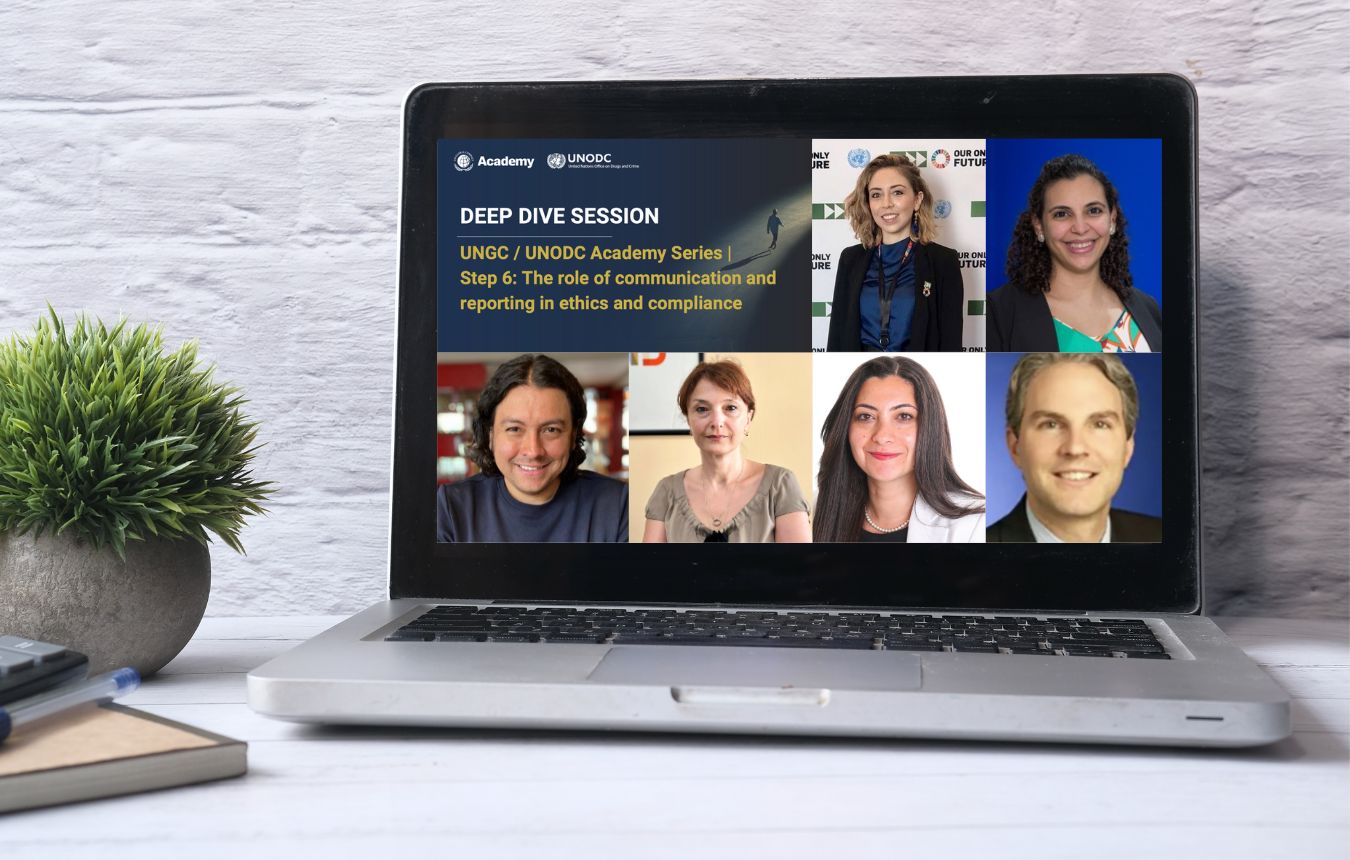
On 10 October 2024, the United Nations Office on Drugs and Crime (UNODC) and the United Nations (UN Global Compact) hosted the sixth edition of the Global Webinar Series on Business Integrity. The webinar, translated live from English into French, Portuguese, and Spanish, drew over 800 participants from 100 countries to discuss the role of communication and reporting in enhancing ethics and compliance. This event was aligned with the key takeaways from the Private Sector Forum at the tenth session of the Conference of the States Parties (CoSP) to the United Nations Convention against Corruption (UNCAC), which emphasized the importance of moving beyond traditional compliance frameworks to fostering integrity, collaboration, and long-term systemic change through innovative reporting and communication strategies.
During the technical presentation, the Communication on Progress (CoP) of the UN Global Compact was presented to participants. The CoP communicates to stakeholders the progress made on reaching Principle Ten, along with UNCAC The CoP includes metrics such as the presence of an anti-corruption compliance programme in a company, guidelines and policies for employee procedures in conflict-of-interest situations, and the company’s engagement in collective action. The CoP also accounts for reported incidents of corruption and how companies deal with them.
Speakers in the subsequent panel discussion included Brent D. McDaniel, Forensics Partner at KPMG, United States of America, Natia Mikautadze, Head of Compliance at TBC Bank and Group, Georgia, and Dr. Rasha Kassam, Senior Lecturer in Accounting at Aston University in the United Kingdom. They discussed how effective and transparent communication and reporting channels reinforce organizational ethical values and encourage employees to report concerns, thus serving as a foundation for a culture of ethics and compliance.
The panellists emphasized the need for regular effectiveness assessments of communication and reporting channels to monitor, adjust and improve them based on continuous feedback from employees and stakeholders. They also discussed how to address challenges for companies reporting on compliance, including via the CoP.
The webinar underscored the need for evolving communication strategies in line with global trends such as the increasing demand for corporate sustainability, collaboration with stakeholders, and collective action. By aligning communication and reporting with these broader objectives, organizations can drive positive change not only within their own operations but also across supply chains, contributing to a more responsible business environment and sustainable development. This effort complements initiatives outlined in the Resource Guide on State Measures for Strengthening Business Integrity which provides valuable guidance on how governments can incentivize business integrity and establish effective frameworks for corporate compliance and anti-corruption measures.
