Paris (France), 12 June 2023 – Incentives for business integrity offered by governments have a strong potential for encouraging companies to invest in the development of internal governance structures, ethics, and compliance programmes. Indeed, the role of businesses in countering corruption has been acknowledged by authorities and lawmakers, leading to the evolution of public policies. Anti-corruption policies have therefore expanded from focusing solely on regulating business behaviour through criminal law to incorporating anti-corruption compliance standards, guidelines, and tools that aim to enhance companies’ ability to prevent, detect, and address corruption. In this context, authorities are increasingly recognizing the effectiveness of government incentives in promoting robust corporate compliance.
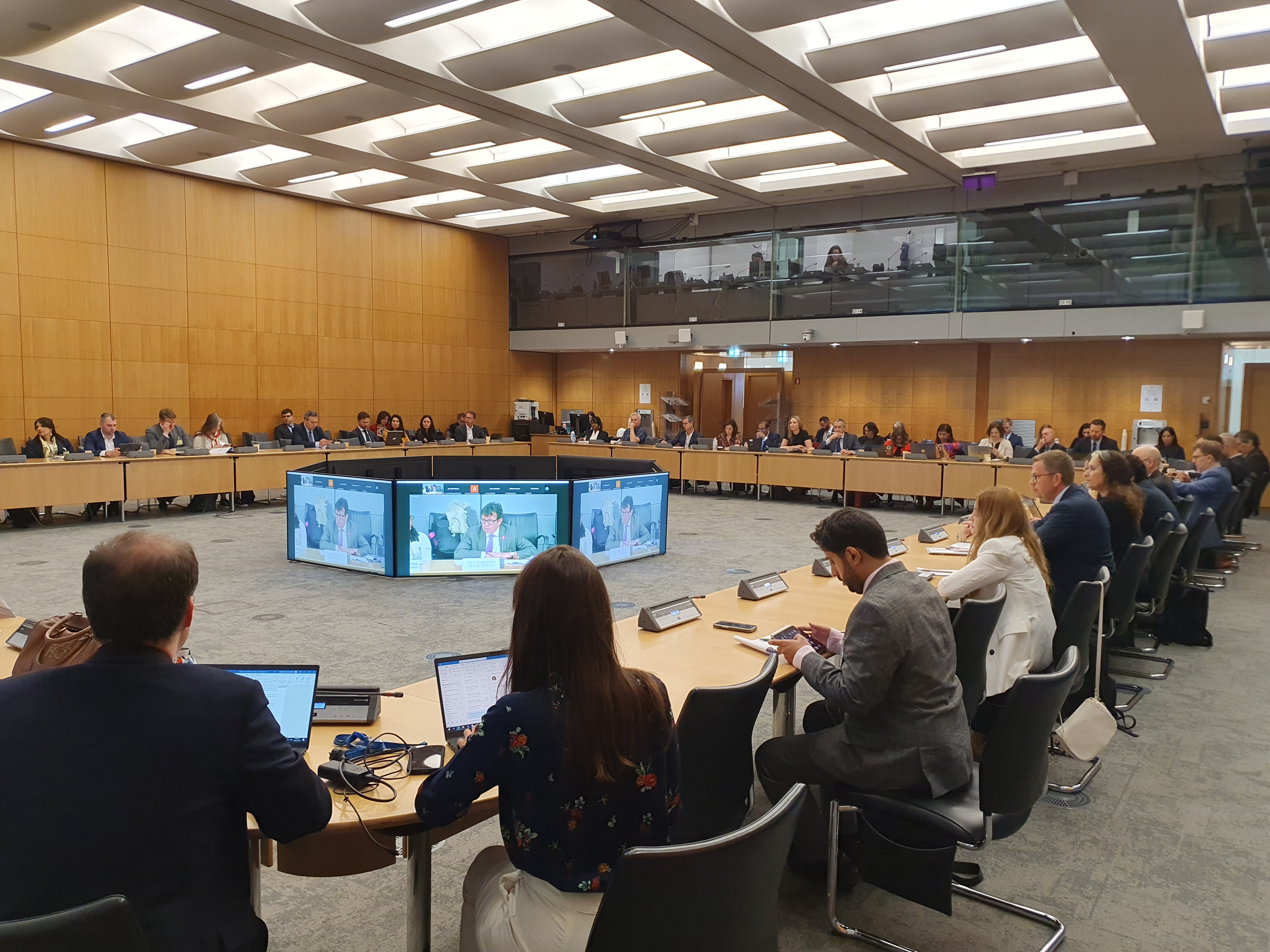
To facilitate a discussion between the private sector and government officials about the different ways that governments can stimulate corporate anti-corruption compliance and business integrity, the United Nations Office on Drugs and Crime (UNODC) and the Organisation for Economic Co-operation and Development (OECD) organized a public-private dialogue on government incentives and assessments for promoting corporate anti-corruption compliance in Paris, France on 22 and 23 May.
During the event, UNODC introduced its work on updating its “Resource Guide on State Measures for Strengthening Corporate Integrity”, which features case studies on how States around the globe make use of incentives to promote integrity in the private sector.
UNODC co-organized the dialogue as part of its Global Action for Business Integrity project funded by the Siemens Integrity Initiative. UNODC’s work in the area of business integrity aims to prevent and combat corruption by strengthening legal frameworks, helping small businesses identify corruption risks, and involving youth, civil society, and academia in developing anti-corruption responses.
The event, which brought together government officials, as well as private sector professionals, civil society, academia, and various international organizations, provided an opportunity to engage in a dialogue on incentives for business integrity.By bringing together this diverse group, this public-private dialogue initiated the creation of a peer-learning community to:
Discuss the challenges faced when governments incentivize and assess corporate anti-corruption compliance programmes, and
Identify in sights and good practices to help governments provide effective incentives for corporate compliance efforts.
The roundtables in Paris concluded that fostering a continued public-private dialogue on government incentives is key for promoting corporate anti-corruption compliance.
