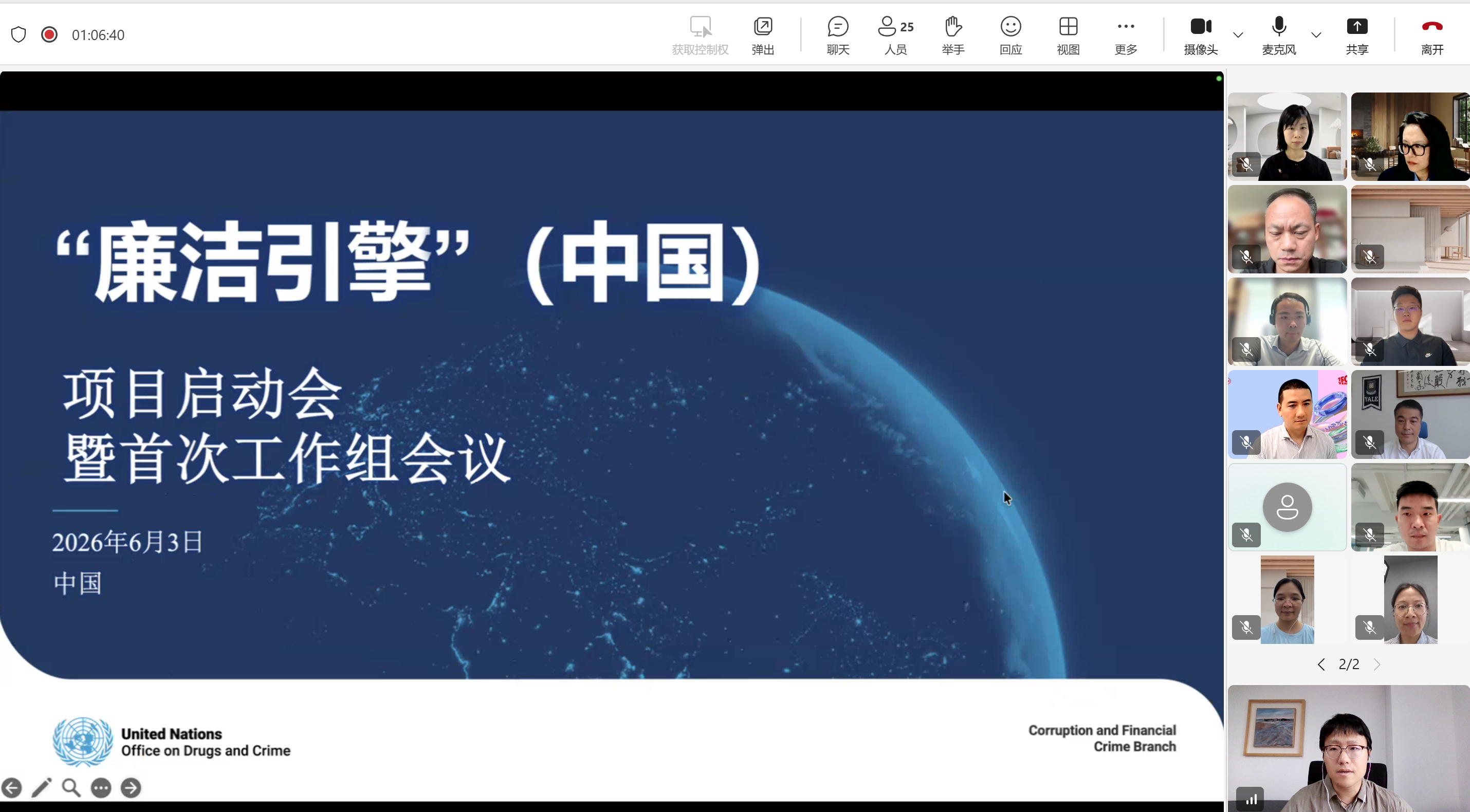
BEIJING, CHINA – 3 June 2026 - The United Nations Office on Drugs and Crime (UNODC) convened the first meeting of the Integrity Engine Working Group in China. Held online, the meeting brought together 22 experts in business integrity, compliance, and anti-corruption from academia, the private sector, and international organizations, marking the launch of the project in the country.
The Working Group serves as the main coordination and advisory mechanism for the Integrity Engine project in China. It will guide the contextualization of the UNODC University Modules on Anti-Corruption and on Integrity and Ethics, adapting them to the local context, including national regulations, real-world case studies, institutional frameworks and industry good practices on anti-corruption and business integrity.
The Group will remain active throughout the three-year project cycle and is open to additional experts from academia and the private sector committed to promoting business integrity in China. More information on the functioning of the Working Group and how to join it can be found here.
The Integrity Engine is a global UNODC project funded by the Siemens Integrity Initiative. It builds on the success of the UNODC Global Integrity Education project (2019–2025) and is currently implemented in Brazil, China, India and Malaysia. The project contributes to the implementation of resolution 11/6 of the Conference of the States Parties to the United Nations Convention against Corruption (UNCAC), which highlights the importance of strengthening education on ethical values, integrity and anti-corruption for young people as a pillar of corruption prevention.
By bringing together universities and companies, the initiative aims to equip students with practical skills to promote integrity in the workplace. It supports curriculum development, lecturer training, and opportunities for students to gain real-world experience.
Participants highlighted the importance of bridging the gap between education and practice, noting that closer collaboration with the private sector will help students better navigate ethical challenges and actively promote integrity in their future careers.
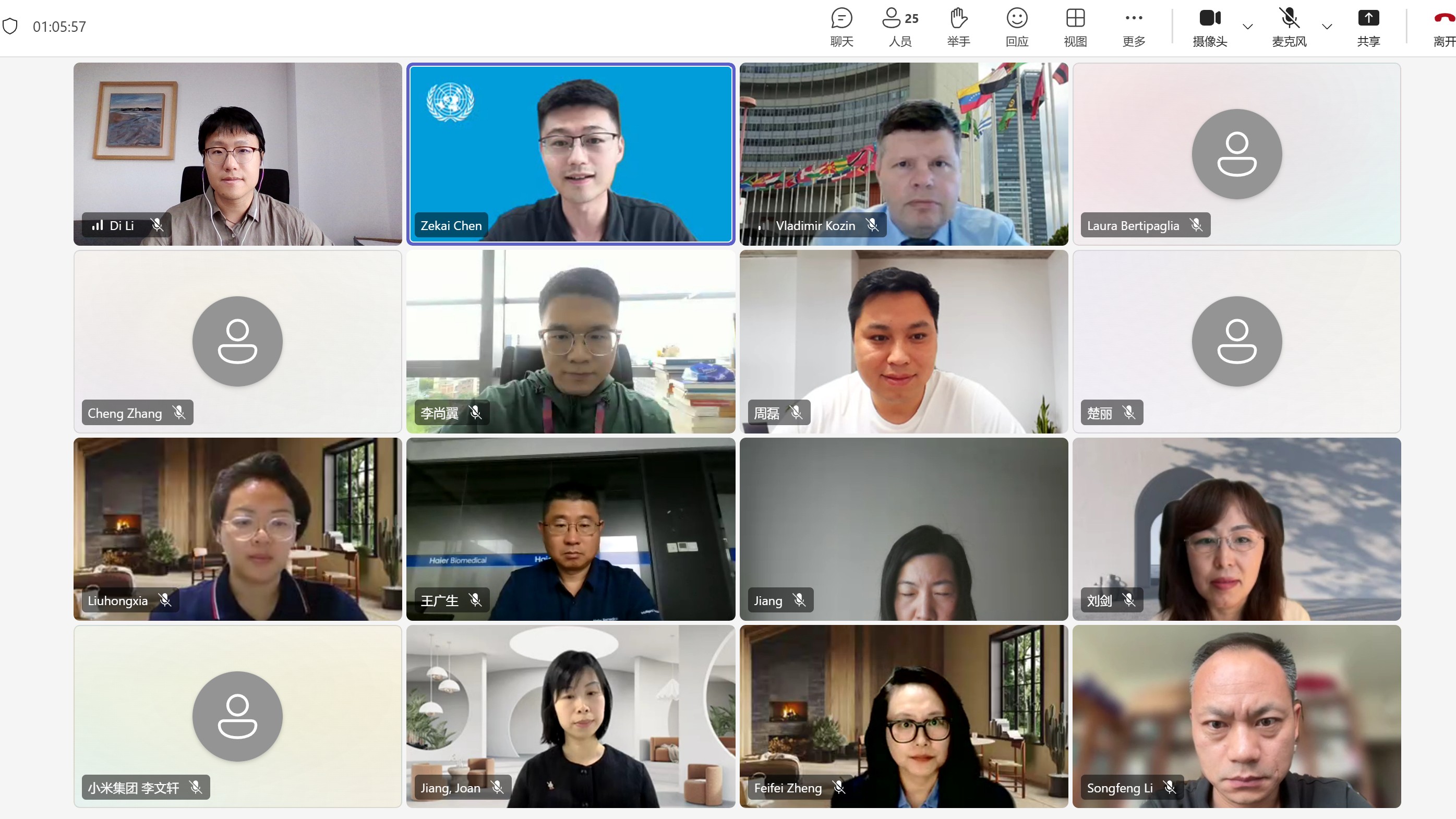
Following the establishment of the Working Group, next steps include adapting selected UNODC anti-corruption, integrity and ethics university modules to the Chinese context, training lecturers and conducting impact assessments. The initiative will also connect students with business practitioners through guest lectures, company visits and work experience opportunities, while encouraging youth-led initiatives on business integrity.
For more information about UNODC's work on anti-corruption and promoting business integrity, please visit the global UNODC website and the UNODC Business Integrity Portal.
